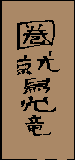
THE KENSHIN RYU STYLE
KENSHIN RYU is a style created by
SHIHAN SEIICHI "SHIKAN" AKAMINE, based on OKINAWAN GOJU RYU and with great Chinese influence. Also takes technics
of SHURI TE, SHOREI KAN, SHORIN RYU, UECHI RYU, SHITO RYU and AIKIDO, that Master
Akamine considered important to consolidate a complete teaching method, to the one
he added his martial interpretation and his scientific knowledge. It is correct to
say too, that KENSHIN RYU evolves from SHIKAN RYU,
that it was the name of the style introduced in Brazil (1957) by Master Seiichi
Akamine.
KENSHIN RYU KATAS - LIST AND ORDER
|
KIHON KATAS
|
1st) UKE GO DAN
2nd) ENPI GODAN
3rd) SUKI GODAN
|
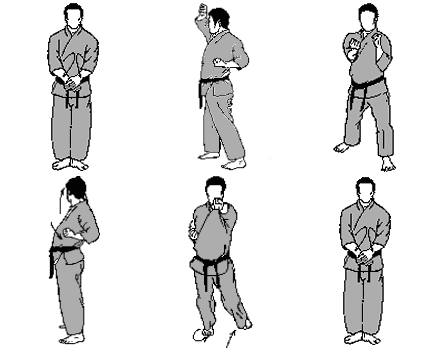
Master Akamine took these three Katas from the training of
GOJU RYU style's kihon, conserving the basic aspects
(position; breathing and technique), but modifying the path (enbusen);
rhythm and grade of difficulty.
|
|
4th) TEKATANA GODAN
5th) TEI SHO GODAN
|
Two Katas created in the West (Brazil) by
Sensei Seiichi Akamine, to teach the blows, and/ or
defenses, of border hand, and of base (heel) of the hand palm.
|
|
These five Katas are the ROOT of KENSHIN RYU STYLE. Then the student
will continue practicing these katas, anyone it is - it was, and it
will be - his degree; increasing the level of difficulty in the rhythm
and in the applications (bunkai) of each movement.
|
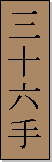
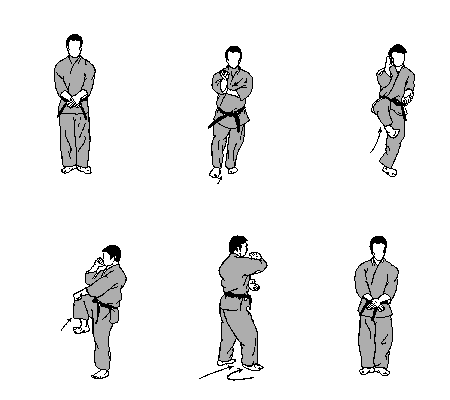
| 6th) KERI KATA |
Kata created by Master Juan Carlos Rius (Sensei Pa Chi),
which shows seven leg techniques (SICHI KERI KATA).
|
|
|
BASIC KATAS
|
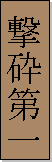
7th) GEIKISAI SHODAN
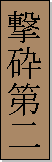
8th) GEI KI SAI NI DAN
|
|
Two Katas also of GOJU RYU style, although Shihan
Seiicchi Akamine took the form and the enbusen (path) of
Okinawan Kobudo.
|
|
| 9th) SANCHIN |
|
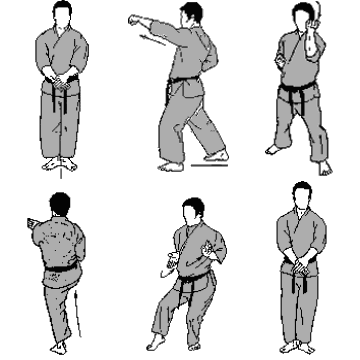
(3 directions, or ways, kata). Taken from TO-ON RYU, as
exercise it becomes trained from white belt (7th. Kyu), but as Kata from
2nd. Kyu (violet belt). It is one of the main ones of the style, defining
the HARDNESS and the FORCE (STRENGTH).
Based on the Chinese form PAIPUREN, teaches a
correct BREATHING - and a
concentration, tension and relaxation work - directed
mainly to benefit the practitioner's health.
Its predominant position is SANCHIN DACHI, and from this
position takes its name.
|
|
| 10th) TEN SHO |
|
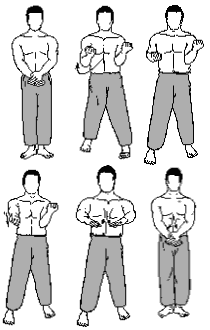
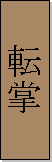
(Palm - or wrist - rotation). Also taken from GOJU RYU,
and based on the Chinese form ROKKUSHU (or
ROKKISHU), it is so important as SANCHIN, but defining the
SOFTNESS and the TECHNIQUE.
|
|
|
|
ADVANCED KATAS
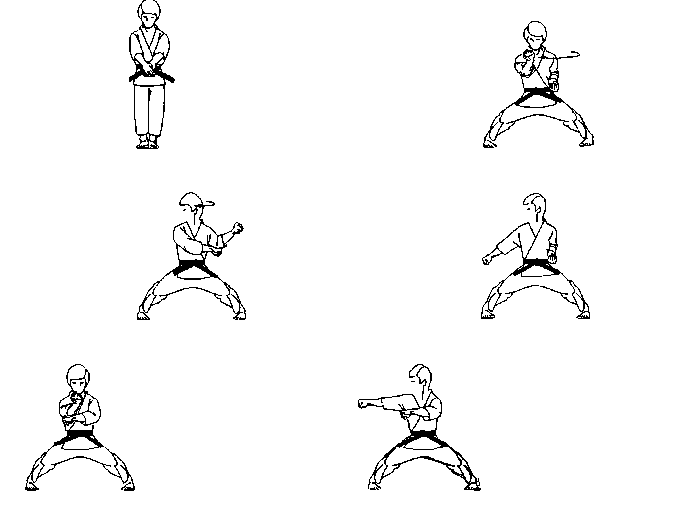
| 11th) NAIHANCHI |
|
Kata of SHORIN RYU (SHURI TE) that Master Akamine chose
because of its lateral displacements, and its balance's training. It is
also knows as NAIFANCHI.
|
|
|
12th) SEI KAN SHU
(or JU KAN SHU)
(or KAN SHU)
|
|
Very old Kata, that takes this name because it shows a group of ten
blockades that, although individually each one has its own name, all are
assembled under the denomination "KANSHU (or
KAISHU) BLOCKADES". It is also knows as
KAN SHA.
|
|
| 13th) SAI FA (or SAI HA) |
|
Kata also common to GOJU RYU style (Okinawan FORM and LINE). It is also knows as SAI FUWA.
|
|
| 14th) SEIONCHIN |
|
(Kata of the Feline), based on the form of
SHITO RYU (SEINCHIN).
|
|
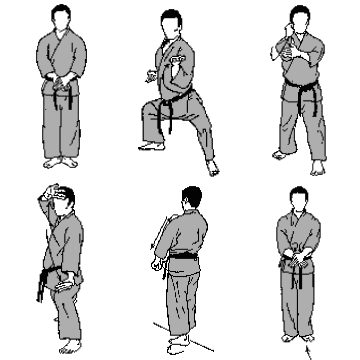
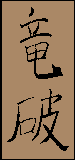
| 15th) RYU FA |
|
(Kata of the Snake). It is Black Belt level kata (1st. DAN). |
|
| 16th) SEI PAI |
|
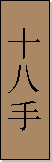
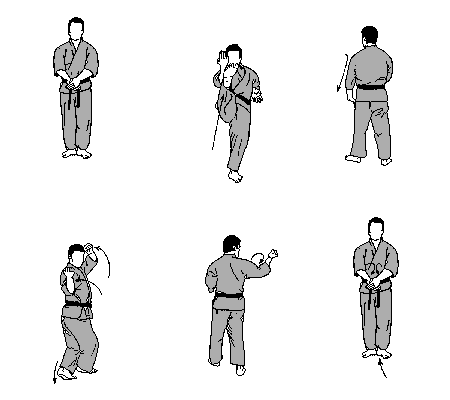
Kata that GOJU RYU style originally called
JU HACHI TE or SEI HACHI TE (18 hands),
and that KENSHIN RYU style call
NISEI ICHI TE, because of it shows 21 different hand's
techniques.
|
|
|
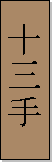
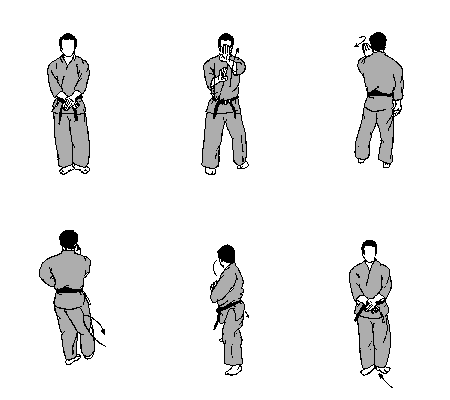
17th) SEISAN TE
(or JU SAN TE)
(or SEI SAN TE)
|
|
(13 hands). Very old Kata, of Chinese origin, developed by some Masters of
SHOREI KAN; UECHI RYU and BUGEIKAN.
Based on the form of the BUBISHI ("PANGAINOON SEISAN"),
nothing has to do with the versions SEISAN of GOJU RYU, neither SEISHAN of
WADO RYU.
|
|
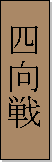
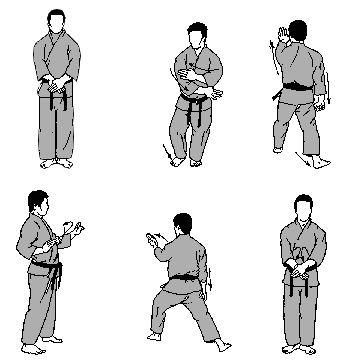
| 18th) SHISOOCHIN |
|
(4 directions - or ways - kata). SISOCHIN for
GOJU RYU.
|
|
| 19th) SANSEI ICHI RYU |
|
(31 movements). SANSEI RYU (Dragon's kata) for
GOJU RYU.
|
|
|
20th) KURURUN FA
(or KURUTON FA)
(or KURU UN HA)
|
|
A sequence of techniques to escape to the "DOUBLE NELSON"
capture, that - in the corresponding position - are
called KU RU RUN FA - constitute the
CENTRAL PART of this kata developed by the style
GOJU RYU.
|
|
|
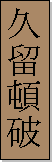
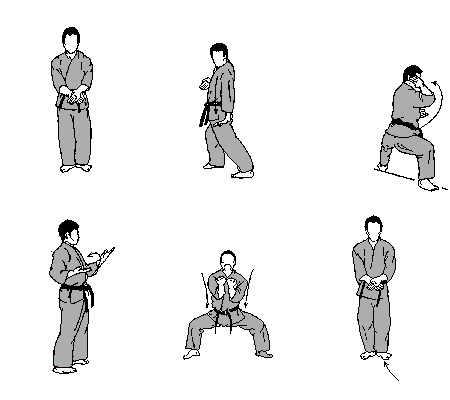
21th) SHUPARINPEI
(or SUPARUNPEI)
|
|
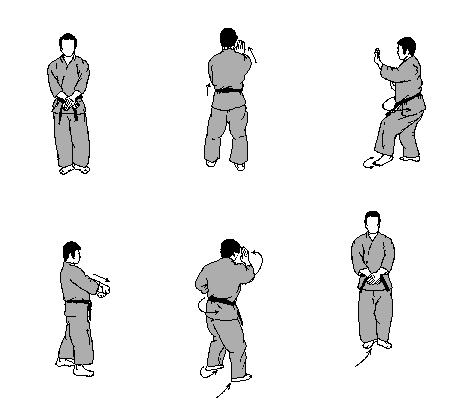
Very advanced Kata of GOJU RYU style, also called HYAKU HACHI TE (one
hundred and eight hands), and PEICHURRIN.
|
|
| 22th) KEN SHIN RYU |
|
Also known as KOSOKUN, is the Japanese Version of
KEN WASHI IN RYU kata.
|
|
| 23th) KEN WASHI IN RYU |
|
(Last of the Style). From Chinese origin
(KEN SHAO LU), it symbolizes the EAGLE.
It was developed in Japan by the Masters Seiko Higa and
Seitoku Higa.
|
|
|
FERNANDO PRIETO
8th. DAN = KENSHIN TETTSU DAI GAKKU