ANALYSIS OF THE OKINAWAN BUBISHI
It is supposed that the Okinawan Bubishi is a summary of system's teachings of the
"Boxing of the Monk of the White Crane"", that is to say techniques of
personal defense where the weapons are the empty hands.
In the Okinawan Bubishi, the systems of the White Crane and Monk's Boxing are united
in an only improved fight method that it is unknown if originally it was a published
book, or a manual copied by the students of some School. Neither it is known if this
text was written or compiled in South China or in Okinawa.
The Bubishi Okinawense is a summary of techniques; katas; bunkai; tactical;
strategies; vital points; popular medicine and ethical moral code for the martial
artists. This summary forms the theory and the practice of the Traditional Karate-Do
(originally " Tode-jutsu "). Tode-jutsu was the name that the Okinawens
people gave to Chinese Kenpo.
Chojun Miyagi (founder of Goju-ryu); Kenwa Mabuni (founder of Shito-ryu); Gichin Funakoshi (founder of Shotokan); Gogen Yamaguchi (founder of the first Japanese Goju-Kai), and other important Masters, had a copy of the Bubishi and they disclosed it in popular books of karate.
Okinawan's Karate (previously Tode-jutsu), it was an informal civil art of personal defense; alternative medicine, and development of vitality - adapted to the Okinawan culture - strongly influenced by Chinese literature; arts; medicine; agriculture; religion and trade.
Between 1920 and 1930, men like Chojun Miyagi; Kenwa Mabuni; Juhatsu Kyoda; Chomo
Hanashiro; Choyu Motobu and others - strongly interested in the origins of this art of
empty hand fight - began informal investigations about the Chinese origins of the
Okinawan karate.
These men had a more developed cultural formation (most of the first karate Maters
were illiterate, or men with little culture) and they were influenced by the social
and cultural forces of the educational Japanese system of Meiji. In fact, it was in
this period when Chinese origins of karate were actively investigated, and a Chinese
Master called "Wu Kiangi" (or Wu Hsien Kuei) was particularly important in
this investigation.
Better known as " GOKENKI ", Wu Kiangi was a White Crane's Chinese Master,
who lived in Naha.
Gokenki was an intimate friend of Miyagi; Mabuni; Kyoda; Matayoshi; Hanashiro; Kana
Kinjo - and other future Masters - to ones he taught and trained.
Gokenki (or Ryuryuko) was a respectful nickname, a title given by the town, that
meant: "Very honorable and Great Master".
Actually it is believed that there is a significant relationship between Gokenki and
the Okinawan Bubishi.
It is known that Miyagi travelled several times to China - sometimes with Gokenki -
who presented him with Quan Fa's important Masters, and helped him to find books about
Chinese martial arts.
The Goju-ryu is a style developed and organized by Miyagi. This style began with
Higaonna's "Sanchin" kata exercises, and developed on theories and Chinese
techniques that Miyagi - strongly influenced by the vision and interpretation of
Gokenki (Ryuryuko) - investigated actively.
The To'on-ryu of Kyoda is the only style that conserves the interpretation of Higaonna, but also with strong influence of Gokenki, from who Kyoda obtained - and introduced in his system - the White Crane's kata "Nepai" (1932).
But as the Okinawan Bubishi is a summary - and not an only text - there are several
divergences. An example of this, is the classification of the vital points.
One classification it is based on acupuncture theories without convincing evidences.
Other it is only based on the observation and experimentation, and a third relate
effects that can only be accepted if they are produced by lances, but not by empty
hand attacks.
Although a hand strongly well trained, and prepared, it can break a kidney - or
perforate the liver, or the intestine - the lances were invented to make easier this
work,.
Besides, the techniques and strategies for combat without weapons, that become trained
in the Okinawan Bubishi, are very effective and a true treasure for the karate
Masters.
Miyagi - as example - used this Bubishi's vision to revise the Higaonna's katas, and
to introduce others that complete the system of teaching Goju-ryu.
The medicine's section of the Okinawan Bubishi it is confused and superstitious, and
many theories derive from astrology. Sketches about acupuncture meridians - without
practical directives - are presented, and the vital points are presented together with
references of the herbal medicine. Today, this section of the Bubishi maybe maintains
an folkloric interest for the historical investigations about the popular Chinese
medicine, but
TO USE IT IS VERY DANGEROUS AND IRRESPONSIBLE.
However, there are some herbes that - ingested at the appropriate hour - have
demonstrated a singular effectiveness.
SANCHIN and PAIPUREN
The Okinawan Bubishi is a system based on a martial Gong Qi (medical Chinese exercises
based on breathing movements, coordinated in order to develop the Qi).
If we study deeply the basic movements of these exercises, we will understand that -
when they mentioned "Paipuren" - who wrote the Bubishi refer to the
exercises of "Sanchin" kata. Then, it is very possible that the old name of
the kata “Sanchin”, trained by the Bubishi School, it was “Paipuren”. But this is not
"Shito-ryu" - neither "Giant Crane" - Paipuren kata, known at the
moment in the Kenpo's Hakutsuru circles.
Today, "Sanchin" and "Paipuren" are basic forms (hsing) dedicated
to the development of the body and domain of the Qi (Ki).
Both katas can be executed in a different way by the different schools.
"Sanchin"; "Paipuren" and other tension's - and breathing's - katas, allow the students to concentrate their energy, without any loss, and to send it to any part of the body; to hit, or to heal.
The martial Qi (or Jin) it is accumulated in the tanden (tan tien), and this is symbolized by a Tiger.
From the tan tien, the Qi can be directed to all the points of the body. This is symbolized by a Crane.
Finally the Qi is expelled outside in an energetic action, and this is symbolized by a Dragon.
"Paipuren" translation it means "sequence of eight steps". This
term belongs to the Chinese esoterism and it is related with the mutations (a dynamic
symbol to represent the eternal - and recurrent - changes of the Nature, that form an
unit with the skies and the man), represented in the eight diagrams (Sea Gua).
The practice of this wisdom and "Paipuren" kata, involves a deep meaning.
In the practical aspects, "Sanchin" and "Paipuren" develop basic
principles that are only in the Quan Fa.
These principles can be summarized in the following elements:
= The kata is a training to learn the correct form of breathing (with the tan tien). An incorrect way of breathing is a factor of bias for many illnesses and waste of the vital energy.
= The kata is also a training to correct the postures that are necessary for the effectiveness of the martial techniques. Beside this, the incorrect posture of the vertebral spine causes back and head pains, and it hinders the mental concentration.
= The kata teaches the correct base for the martial work. The feet hold on to the earth, and the energy concentrates naturally on the center of the body (tan tien), so the blockades - and the strikes - can explode in a powerful action.
= The katas teaches the essential "kamae". The martial artist can hit the center of the rival's body , and - at the same time - to protect the center of his own body.
The advanced techniques; the strategies; the tactics, etc., are summarized in the
advanced katas.
The Bubishi describes these katas but don't show figures. These katas are :
Hakutsuru (Hakaku); Useishi (Gojushiho); Niseishi (Nijushiho); Nepai (Nipaipo), and
four katas of the system Rakkan Ken (Luohan Quan or Monk Fist Boxing).
TENSHO and ROKKISHU (ROKKUSHU)
Some historians – generally the oldest - they refer to "Rokkishu" - or "Rokkushu" - (six hand techniques) of the Okinawan Bubish, as the source of Miyagi's kata "Tensho".
Others have found some similarities between the katas "Rokkushu" and "Happoren", that have taken them to think that this last form could be the base of “Tensho.”
Beside this – nearly in the time - other specialists sustain that the current studies
of the Okinawan Bubishi don't show any correlation among the movements of the
mentioned katas.
These last ones think that the similarity between the techniques of "Tensho"
and "Kakufa" are so marked, that it is probable that the first kata
"Tensho" execution it was a personal adaptation of "Kakufa";
because it was a kata that Miyagi also knew, trained and taught.
In turn, they sustain that the Okinawan Bubishi shows the kata "Rokkushu" as
a representation of six open hand techniques, without any special importance.
The original Tensho kata of Miyagi developed soft revolving movements of hands,
influenced - without any doubt - by the White Crane system. But the modern Goju-ryu
spreads to forget this form, because of the sport competitions of karate.
The current kata "Tensho" is different from the original one, because it has
become a hard (Go) kata. The main reason that took to the current Goju Masters to
modify this kata, it was because of its softness it seemed feminine (Miyagi was seen
as feminine when he executed this kata), and the machysm cultivated among the
masculine Japanese youth, made that this kata was rejected. Then, several
modifications were introduced, that converted it in exercises for the wrists.
THE 48 QUAN TECHNIQUES INFLUENCE IN THE STYLES KENSHIN-RYU and GOJU-RYU
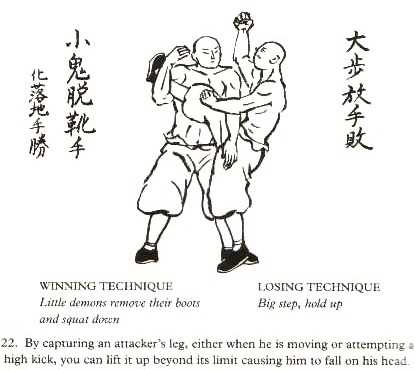
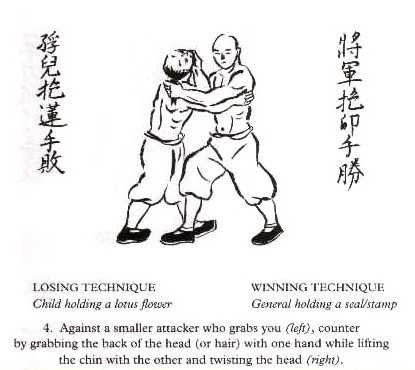
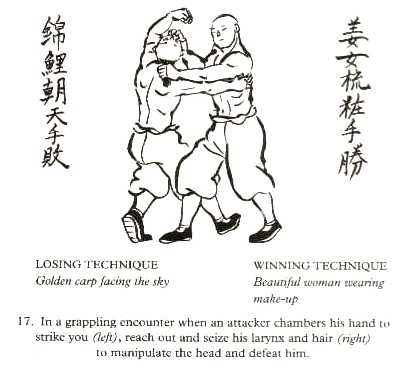
The biggest treasure that the Bubishi teaches, are the 48 illustrated techniques in those are shown two people who fight (see the article " THE FORTY-EIGHT DIAGRAMS OF BUBISHI "). ▸ click
Many Masters – among them Kenwa Mabuni and Gogen Yamaguchi - they gave great
importance to these techniques, because they summarize the essence of the system and
most of the secret bunkai of the "Koryu Kata".
Seiko Higa; Seitoku Higa; Kanki Isumikawa; Seiichi Akamine - and all the true karate
Masters - studied; trained, and understood deeply these techniques.
Although the interpretation of some diagrams it is obvious for the experts, in many
figures arose important controversies.
Many of these techniques can be identified easily in the Chinese katas used by Miyagi
to establish the bases of the teaching system of Goju-ryu, and also in other old
Okinawan katas. This fact shows the importance that the Bubishi had in the development
of the Goju-ryu, being easy to locate - in many of the figures that show the
applications (bunkai) - several Goju-ryu katas, and some old traditional kata of
Okinawa.
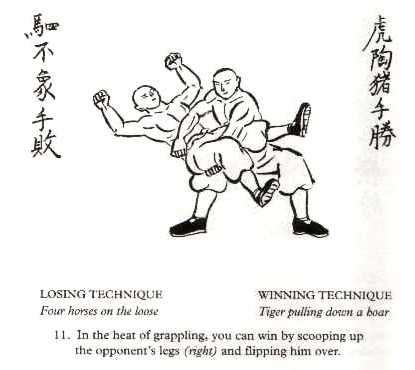
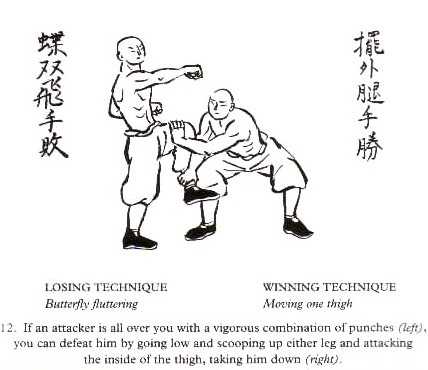
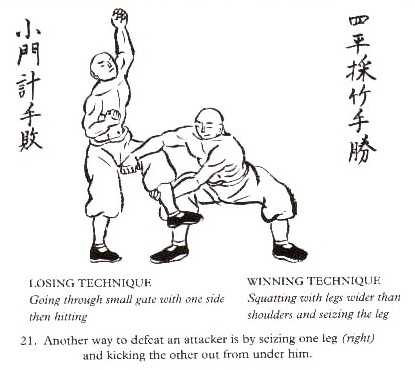
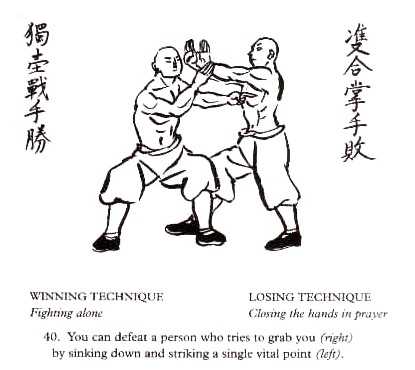
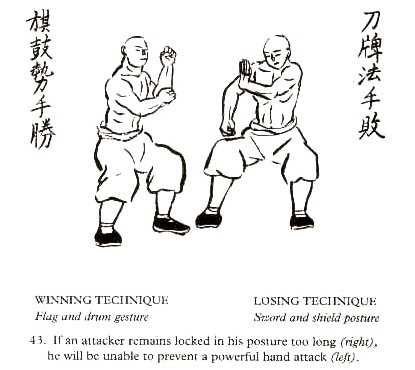
The movements of the kata " Seipai " are very evident in the figures
11, 12, 21, 40 y
43. ▸ click
The style Kenshin-ryu executes the mentioned techniques almost exactly as are shown in
those figures of the Okinawan Bubishi.
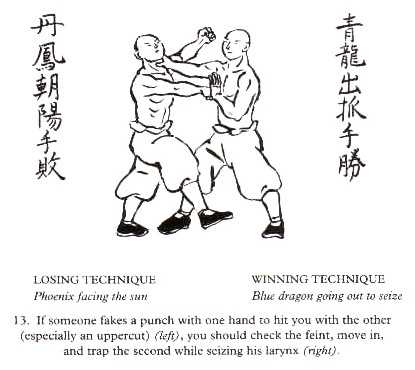
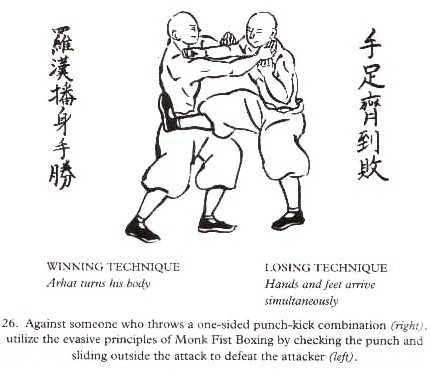
The figures 13 and
26 ▸ click are
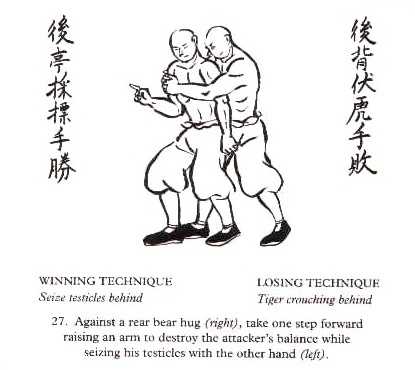
characteristic of the kata Seisan of the style Goju-ryu, and the figure
27 ▸ click can be
identified easily as a typical movement of the kata "Pangainoon Seisan".
This form is trained - among others - by the style Kenshin-ryu. The last application
(bunkai) of the Kenshin-ryu's basic kata (kihon kata) "Teisho Go Dan", also
show this technique of the figure 27.
A variant of the figure
13 can be seen too in the katas
"Kenshin Ryu" and "Ken Washi In Ryu" (both of the style
Kenshin-ryu).
The figure 28 ▸ click is a tecnique of the kata "Kururunfa", trained also by Goju-ryu and Kenshin-ryu styles.
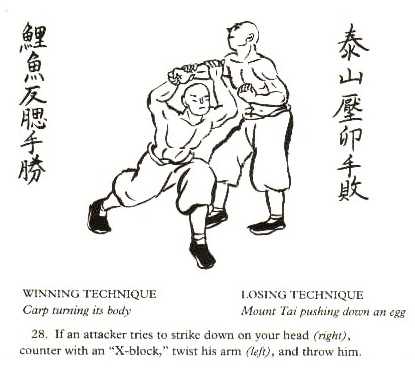
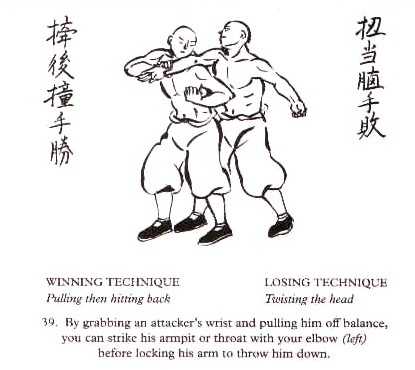
The figure 39 ▸ click
is an unique technique of the kata "Kururunfa", also trained by the styles
Kenshin-ryu and Goju-ryu.
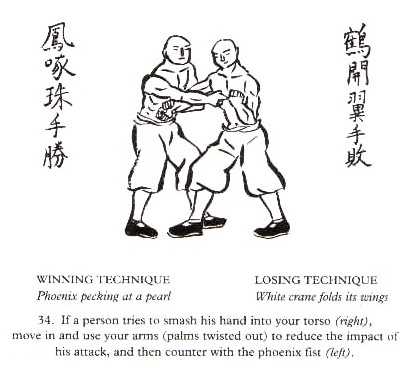
Besides the figure 34
▸ click
sample clearly the first movement of the kata "Niseishi" (or
"Nijushiho"), the figure
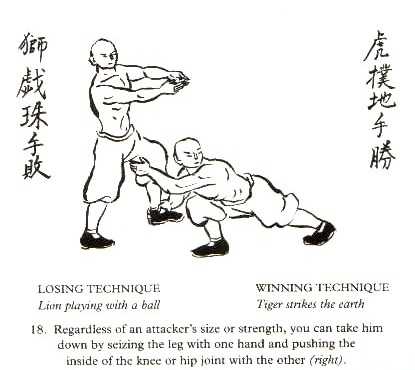
18 ▸ click
sample a well-known movement in Tode-jutsu that is executed in the katas
"Wanduan", "Niseishi", "Kururunfa" and "Sanseiryu
" (the last two also trained by the styles Kenshin-ryu and Goju-ryu).
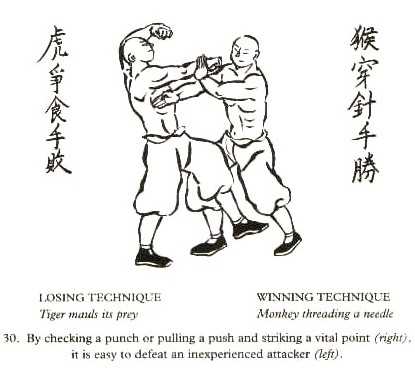
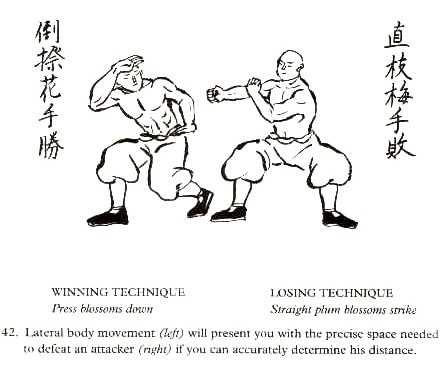
The figures 30 and 42 ▸ click are typical techniques of the old execution of the kata "Shisoochin" (styles Goju-ryu and Kenshin-ryu), and of the katas Kenshin Ryu and Ken Washi In Ryu (both of the style Kenshin-ryu).
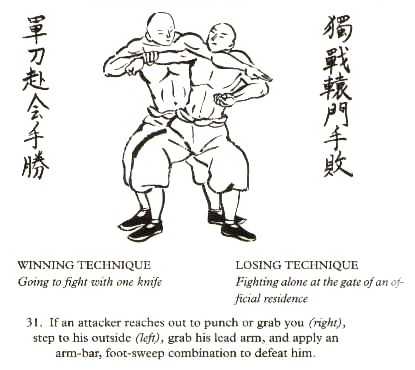
The figure 31 ▸ click is a variant of the application (bunkai) of one of the first techniques of the katas Kenshin Ryu and Ken Washi In Ryu" (both of the style Kenshin-ryu), that is executed in Orishiku dachi in the mentioned katas, continuing with "Neko ashi dachi". In the development of both katas, this variant repeats several times in "Shiko dachi".
The figure 46 ▸ click is a typical technique used in the katas "Seiunchi" and "Suparinpei" (both of Goju-ryu style); as well as in the katas "Seionchin" and "Shuparunpei" (both of Kenshin-ryu style).
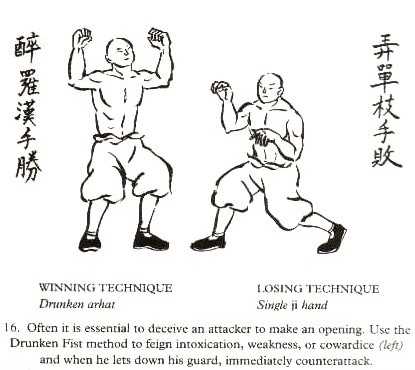
The figure 16 ▸ click is the last movement of the katas "Sanseiryu" and "Suparinpei" (both of Goju-ryu style); and of the katas "Sansei Ichi Ryu" and "Shuparunpei" (both of Kenshin-ryu style).
The figure 01 ▸ click is a variant of the first tecnique application (bunkai) of the kata "Seionchin" (Kenshin-ryu style), as well as the kata "Seienchi" (Shito-ryu style).
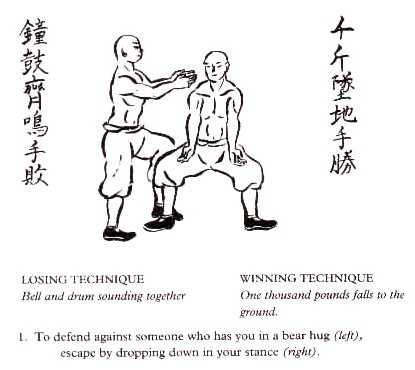
The figure 10 ▸ click is a variant of a technique of the kata "Saifa" (or “Saifuwa”), form that the styles Kenshin-ryu and Goju-ryu also train.
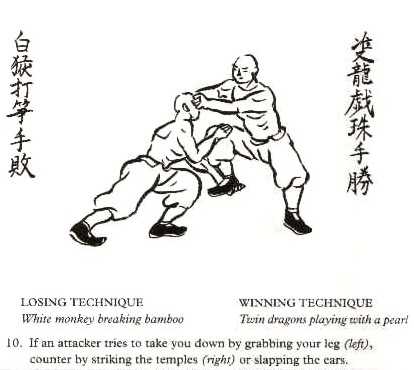
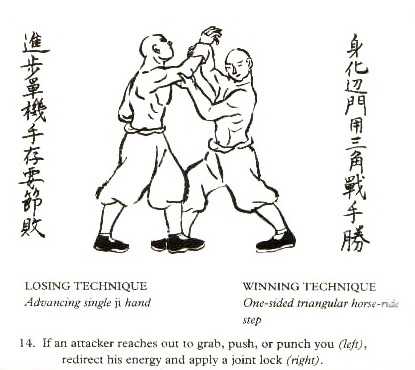
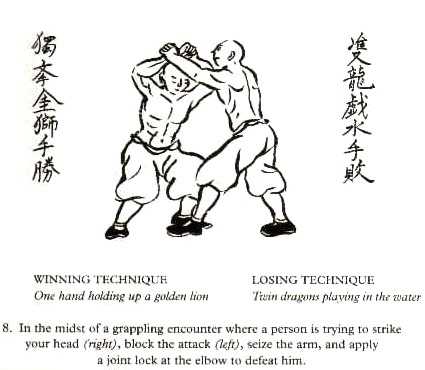
In the figure 14 ▸ click we can see a typical technique of the kata "Kusanku", and the figure 8 ▸ click is the opening movement of the old kata Kusanku of Takemura (also known as Azato-no-Kusanku). "Kenshin Ryu" (one of the most advanced katas in the style that in fact taking its name), it is based on the kata Kusanku of Takemura.
Studying carefully these 48 figures, that arise of Bubishi, we can see several
techniques and methods of the system Quan Fa.
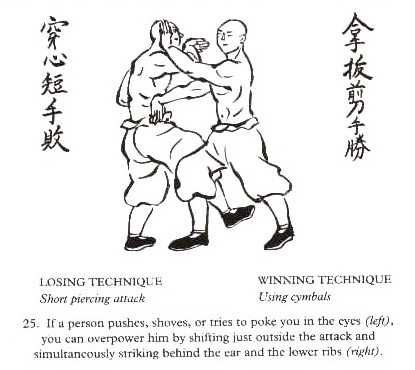
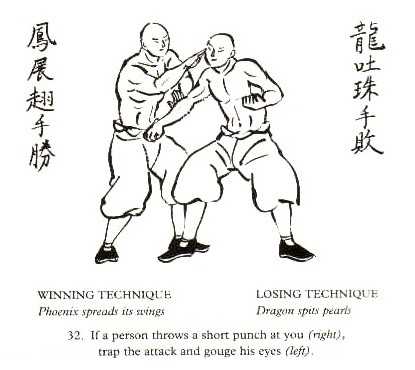
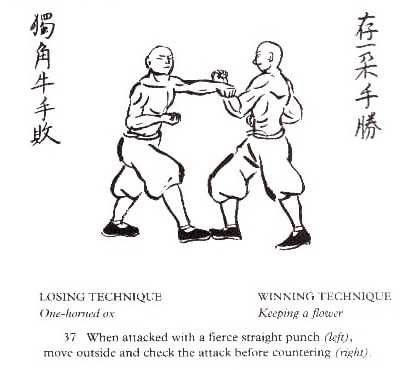
The figures
25 ▸ click (mawashi-uke,
followed by tora-uchi*); 32
▸ click
(chudan uchi-uke with open hand), and
37 ▸ click (chudan
yoko-uke with closed fist), all seem to be only to remember the basic blockades used
by the school represented in the Bubishi.
*Tora-uchi is a summarized way of calling the double simultaneous technique
"Ryo Sho Nidan Mae Teisho-uchi", also known as " yo Sho Awase
Teisho-uchi , and "Ryo Sho Yama Teisho-uchi".
The blockade "jodan-uke" it is in these figures too, executed with both
hands like a blockade in equis (juji uke). Here it is used to block a strike to the
head, or an grabs of hair. This blockade is naturally completed with a front kick to
the opponent's groin.
Along the 48 figures we can see hand strikes executed with four fingers (shihon
nukite); with one finger (ippon-nukite); with crane fingers (kakushiken); with palm of
the hand (teisho uchi); with knuckles (seiken; hiraken); with hammer (kentsui or
tetsui); with elbow (ushiro hiji ate), as well as breathlessness with the fingers
(shikyo and koko), and grab of testicles.
The training of the fingers was very developed in this system (a similar training it
is used in the style Kenshin-ryu).
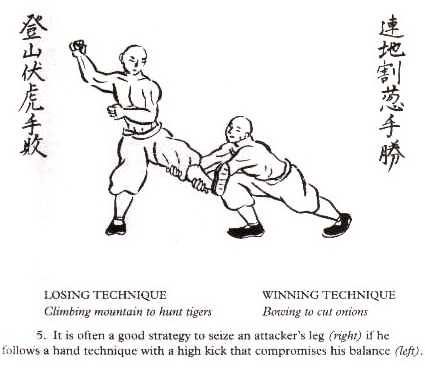
The front kick is the only one showed, with the performer always slack and relaxed
(figure
5, 12, 21, 22 and
26). ▸ click
This shows us that the kicks were not considered a good technique in that school, and
maybe were only used as a complement of some defense techniques.
There are also figures where the purpose is to show the specific painful points, and
how should be manipulated. This is shown in the figures
14 ▸ click
(the insert of the triceps with the elbows);
30 ▸ click
(armpits cost and/or thorax) and
40 ▸ click (the
intercostals under the nipples).
The vital points shown along the 48 figures are: testicles; throat; eyes; jaws (side);
and carotids (see figure 31). ▸ click
Finally, the most dangerous technique shown in the 48 figures of the Bubishi, is the
performer who easily crash its rival's neck, in a fight body to body (figures
4 and
17). ▸ click
More than one kata of the style Kenshin-Ryu shows in its applications (bunkai) this
type of technique.
The Quan Style of the Bubishi
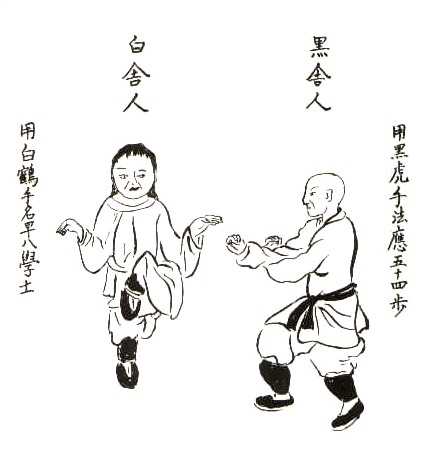
The Okinawan Bubishi it is considered a text of "White Crane Kenpo".
Several references - included a painting - of this text, show this boxing system as a
woman creation, that was incorporated in the "Boxing of the Tiger" by a
strong and skilled fighter called Zeng Cishu.
In this painting we can see the image of a woman (possible creator of the "White
Crane") in a classic Hakutsuru-no-Kamae and - to her side - the image of a man in
the tiger posture of the opening of "Gojushiho" kata.
This painting is preceded by anotherone, that shows the posture of the opening of "Niseishi" kata, belonging to the "Boxing of the White Monkey".
Beside this, the style of the "Monk's Boxing" it is explicitly mentioned
along the text.
Maybe the Bubishi is a system based on a synthesis of five big Shaolin styles (as the
" Five Superiors Previous Boxers "), that was created from these five
systems, but having the "White Crane Boxing" as its angular stone.
Most of the historians coincide that the Okinawan Bubishi could be an amalgam of four
styles :
"White Crane Boxing"; "Monk's Boxing"; "White Monkey
Boxing", and "Tiger Boxing"; to the ones finally were added the
“Drunk's Boxing”, probably to satisfy the occult Chinese numerology (mythology of the
five Superior Ancestors).
Surely, for this reason the Bubishi mentions the "Drunk's Boxing" as a very
effective style.